|
Standard Query Parser |
The Extended DisMax (eDismax) Query Parser |
|
|
Use |
If Edimax is turned off in configuration, the “Standard Query Parser” is used. |
Edismax is enabled by default, but can be turned off in configuration (/admin/config/search/advanced). |
|
Capacity |
|
|
|
Search |
Content indexed into a string field
Content indexed into a full-text field
|
Content indexed into a string field
Content indexed into a full-text field
|
|
Operator |
Usage |
Example |
|
AND |
Narrow down your search to include results that contain both search terms |
orientation AND games |
|
OR |
Broaden your search to include results that contain either search term |
students OR undergraduates |
|
NOT |
Narrow your search by excluding certain words or phrases |
orientation NOT games |
|
Asterisk (*) |
Replaces the asterisk with multiple characters. Use to search for multiple beginnings, middles, and endings of words. |
librar* will include results like:
|
|
Question Mark (?) |
Replaces the question mark with a single character. Use to search for multiple beginnings, middles, and endings of words. |
?est will include results like:
Will not include:
|
|
Tilde (~) |
Use to make your search ‘fuzzy’ or search for synonyms and alternate spellings. Only works for Keyword search. |
Shaun~ will include results like:
|
|
Quotation Marks (“”) |
Use quotation marks to search for a specific word or phrase. |
“alumni golf tournament” |
## Requirements Advanced Search requires an installation of Solr, as its syntax is Solr-specific. The Advanced Search blocks also utilize the Facets API, therefore they only work on Views where Facets are enabled. The following requirements (Drupal modules) will be downloaded automatically by Composer: - [facets](https://www.drupal.org/project/facets) - [search_api_solr](https://www.drupal.org/project/search_api_solr) You do not need to use Islandora, however the instructions below for setting up search within a collection (and optionally, its subcollections) use an pattern that is used by Islandora whereby nodes are organized in a hierarchy using an Entity Reference field (typically called "Member Of" / `field_member_of`) on a node that accepts other nodes as values. If you are using Advanced Search and want to make use of "Search Sub-collections" then you will need to set up such a field on your content type(s). ## Installation This module is part of the [Islandora Starter Site](https://github.com/Islandora-Devops/islandora-starter-site), which is a full Drupal site setup that includes Solr, and automatically sets up the views and facets required for Advanced Search to work. To download and enable just this module, use the following from the command line: ```bash composer require drupal/advanced_search drush en advanced_search ``` ## Configuration This module will make the following blocks available for every _display_ of a Search API view: * Advanced Search Block * Pager Block This module also provides a block called "Search" that you can place and configure as a global search block. You can configure these blocks to show up on pages with their respective views using Drupal's Block interface. You can set the following configuration at `/admin/config/search/advanced`:  ## Configuring Solr Please review [Islandora Documentation](https://islandora.github.io/documentation/user-documentation/searching/) before continuing. The following assumes you already have a working Solr and the Drupal Search API setup. ## Extended Dismax (eDismax) Search Read the [Drupal.org documentation on Solr Query Parsers](https://www.drupal.org/docs/contributed-modules/search-api-solr/solr-query-parsers) to find more detail about eDismax Search in Drupal. You can enable Extended Dismax search on this module's configuration page at `admin/config/islandora/advanced_search`. This will affect all Advanced Search and Search blocks provided by this module. ## Configure Search Fields for Collection Search See "Requirements" for a discussion of the use of `field_member_of`. In this section we set up fields in our Solr index (using Search API). The first Search API field ("Member of") indexes a node's parent(s) based on the Drupal field `field_member_of`, and the second ("Descendant of") indexes a node's parents and its parents' parents. This second field's recursive behaviour is achieved by using Search API's "Index hierarchy" processor. First ensure that your hierarchy field (assumed for convenience to be `field_member_of`) is indexed at `admin/config/search/search-api/index/[your default index]/fields`. If not, add the field using the "Add field" button. When you find "Member of (field_member_of)", click the "Add" button - do not delve into the child properties under "(+)". We will assume that the Search API field's name is also "Member of". The field type should be "Integer". Next, create a second Search API field, exactly the same as the first field except for its name, so we can tell them apart. We'll call this one "Descendant of".  Then, under the Processors tab (`admin/config/search/search-api/index/[your default index]/processors`) enable the checkbox for `Index hierarchy` and at the bottom of the page, setup the processor to index hierarchy for "Descendant of" (but not "Member of"). 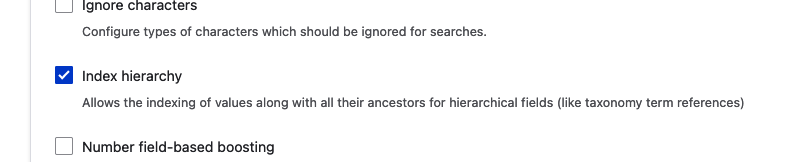 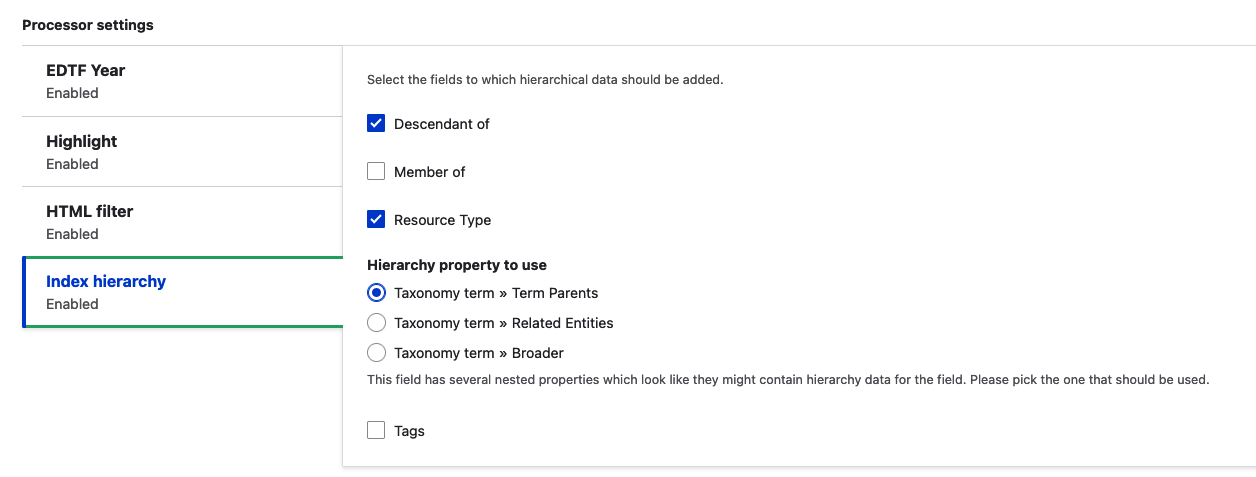 This "Descendant of" field now contains a list of all its ancestors, so can be used as a contextual filter on views, thereby allowing the view to display all descendants of a given node. See the section below, "Collection search", to finish configuring your site for collection and sub-collection search. > N.B. You may have to re-index to make sure the field is populated. ## Configure Views Detailed instruction on the configuration of views is outside of the scope of this document. Please read the [Drupal Documentation](https://www.drupal.org/docs/8/core/modules/views), as well as the [Search API Documentation](https://www.drupal.org/docs/contributed-modules/search-api). To use the Advanced Search module, you will need to create at least one view that is based on Search API and uses Solr. However, do NOT add the "Fulltext search" filter, despite that being the "usual" way of setting up a Search view. All fulltext searching (and fielded searching) will be handled by blocks provided by this module. ### Exposed Form Solr views allow the user to configure an exposed form (_optionally as a block_). This form / block is **different** from the [Advanced Search Block](#advanced-search-block). This module does not make any changes to the form, but this form can cause the Advanced Search Block to not function if configured incorrectly. The Advanced Search Block requires that if present the Exposed forms `Exposed form style` is set to `Basic` rather than `Input Required`. As `Input Required` will prevent any search from occurring unless the user puts an additional query in the Exposed form as well. 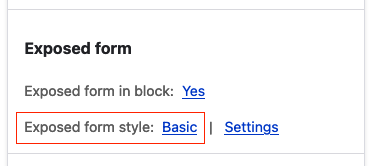 ### Collection Search This module's "Advanced Search" block can be set up on a "collection" (or, generically, on hierarchical entities that can contain other entities). This block allows the user to select whether they want the search to include sub-collections. 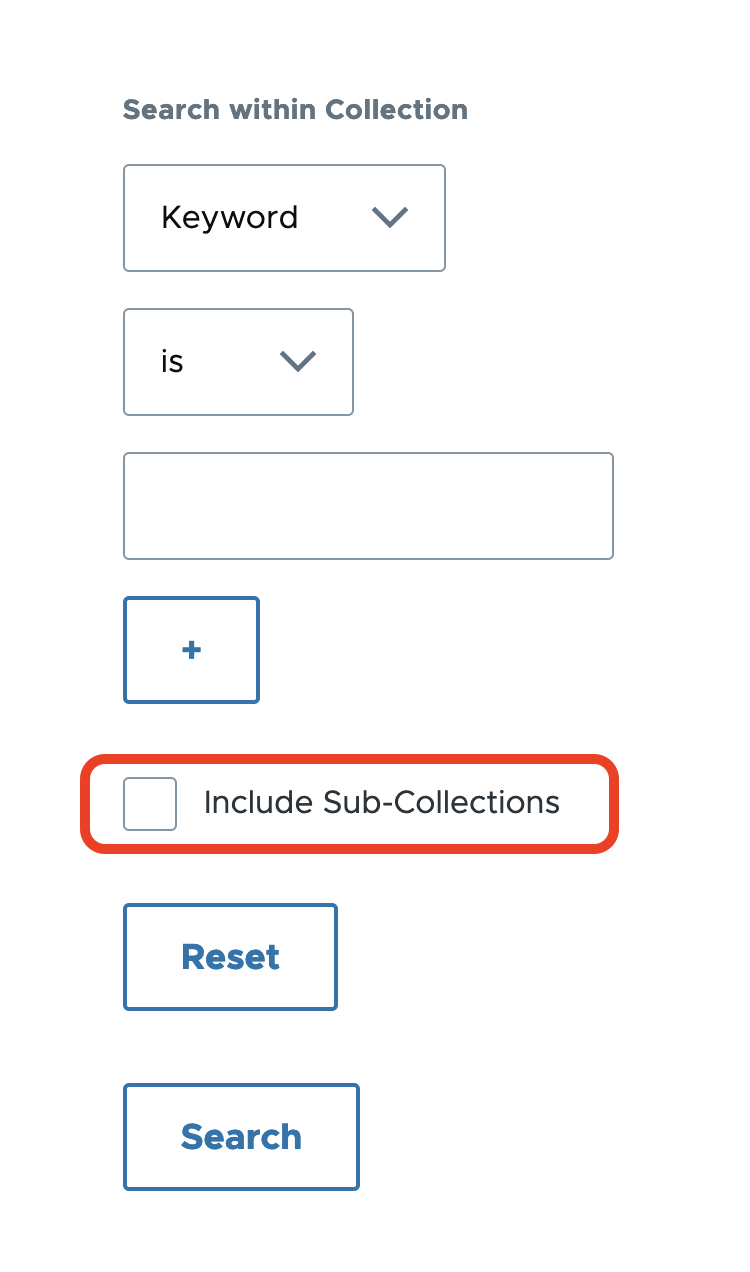 The following instructions describe how to set up this feature. First, in your Search API view, set up **two** contextual filters: 1. "Member of" (Direct descendants only) 2. "Descendant of" (All descendants) 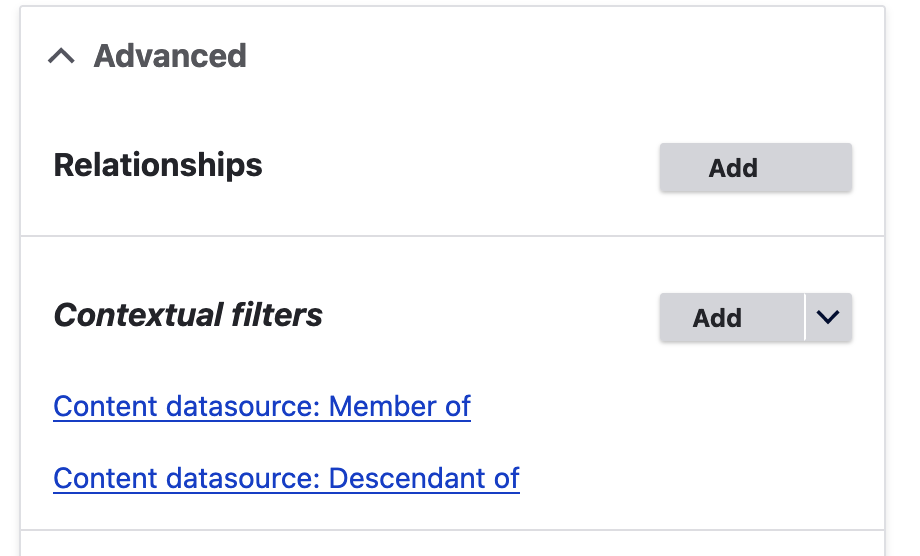 Both of these filters are configured the exact same way. The only configuration to set is "When the filter value is NOT available" then "Provide default value". Under Type, select "Content ID from URL".  These two contextual filters are used by the Advanced Search block to expose the toggle to search direct descendants or all descendants (documented under "Advanced Search Block", below). ### Paging The paging options specified here can have an affect on the pager block (*documented below*). 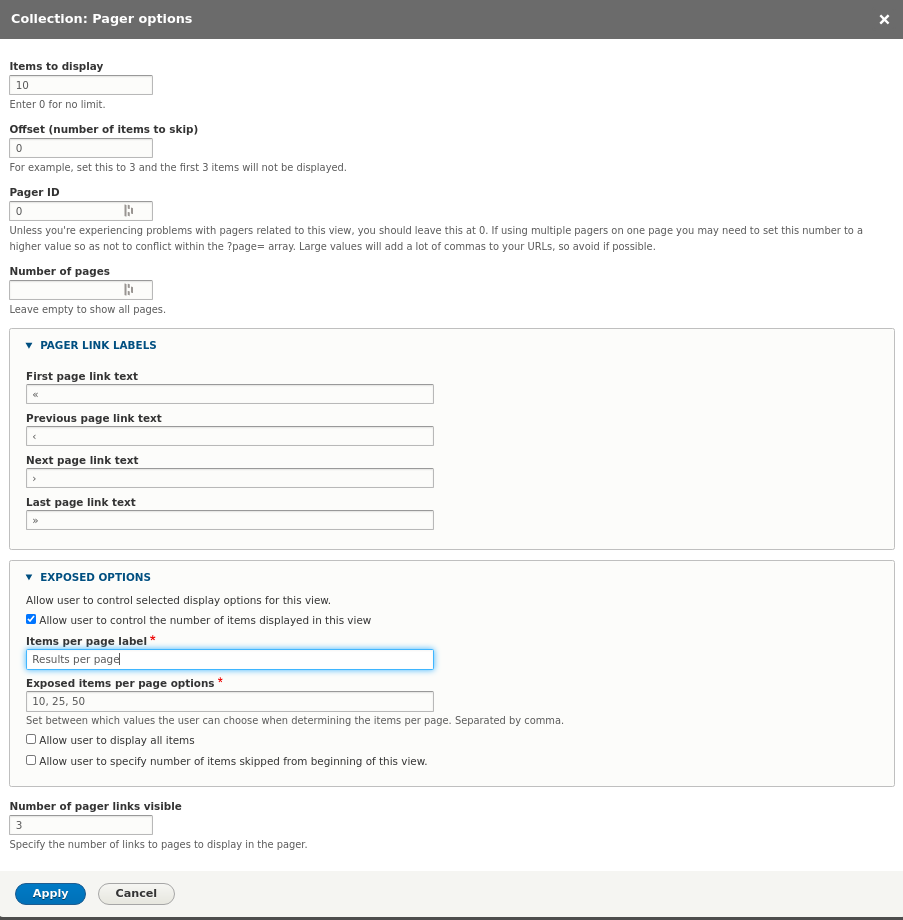 ### Sorting Additional the fields listed as `Sort Criteria` as `Exposed` will be made available in the pager block (*documented below*). 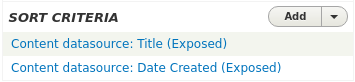 ### Search Highlighting 1. Add Search Excerpt to the Advanced Search View. - Navigate to `/admin/structure/views/view/advanced_search`. In the `Fields` section, click `Add`, then select `Search Excerpt`.' 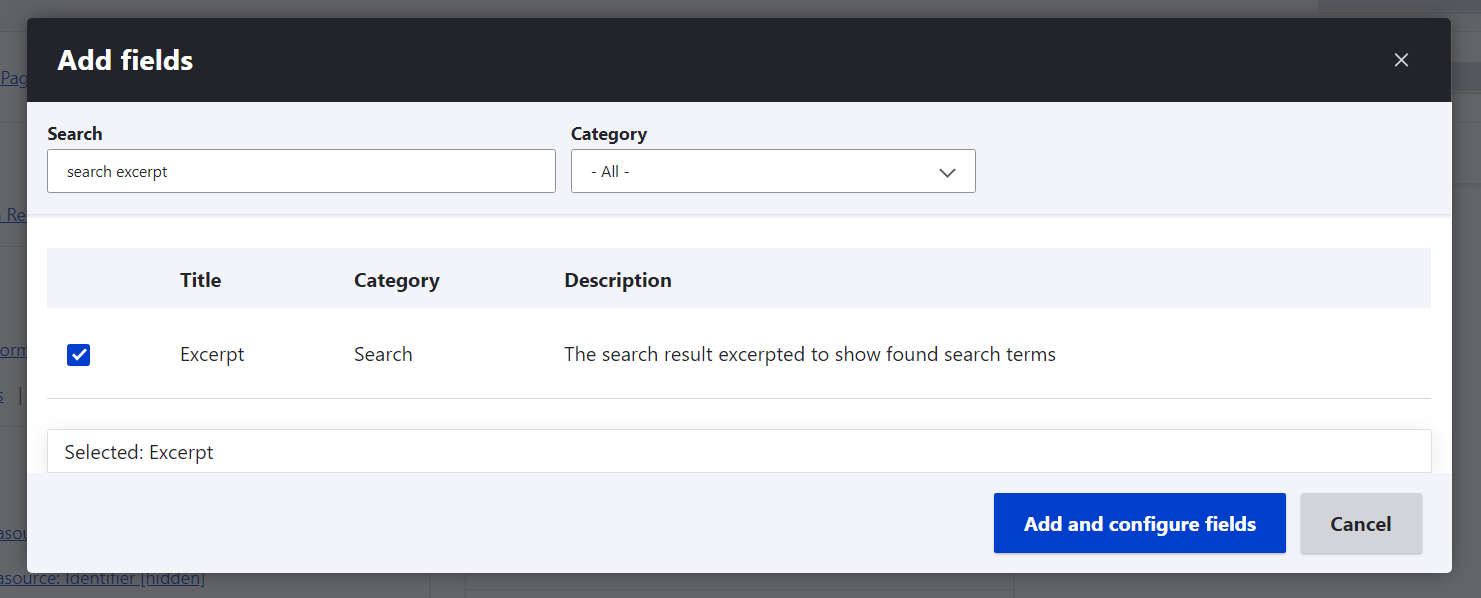 2. Turn on Search API highlight processor - Navigate to `/admin/config/search/search-api` > Edit Index > Processors > Enable Highlight processor. 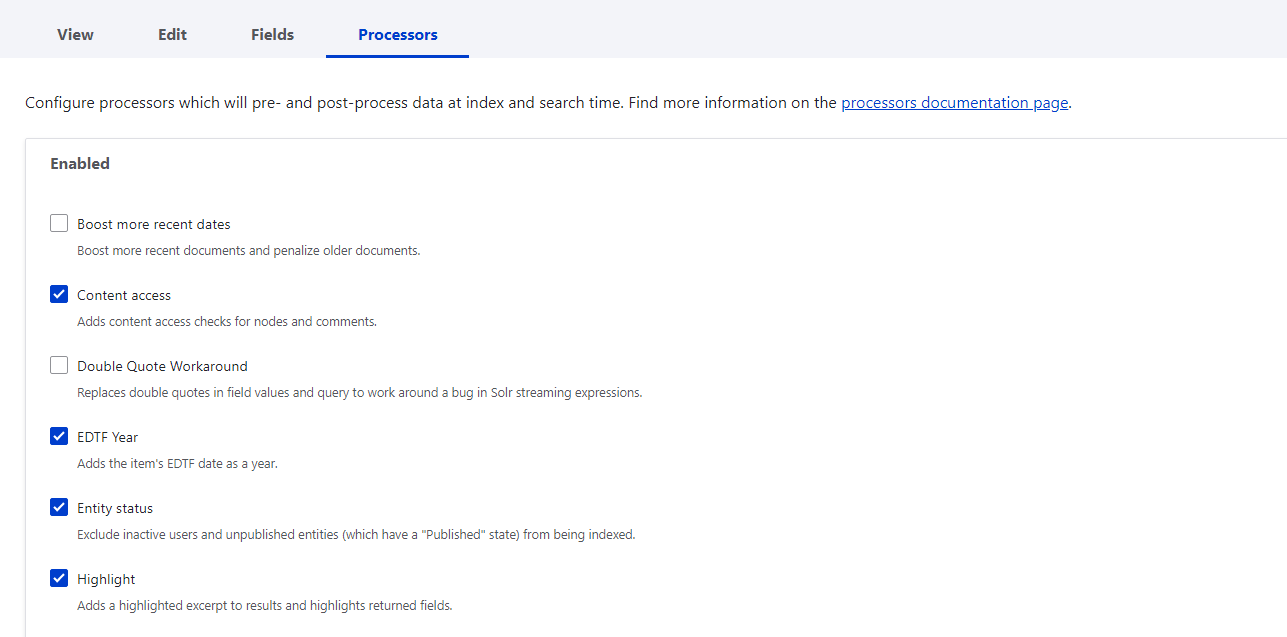 - At the bottom of the form, under Processor Settings > Highlight > Select `Create excerpt`. 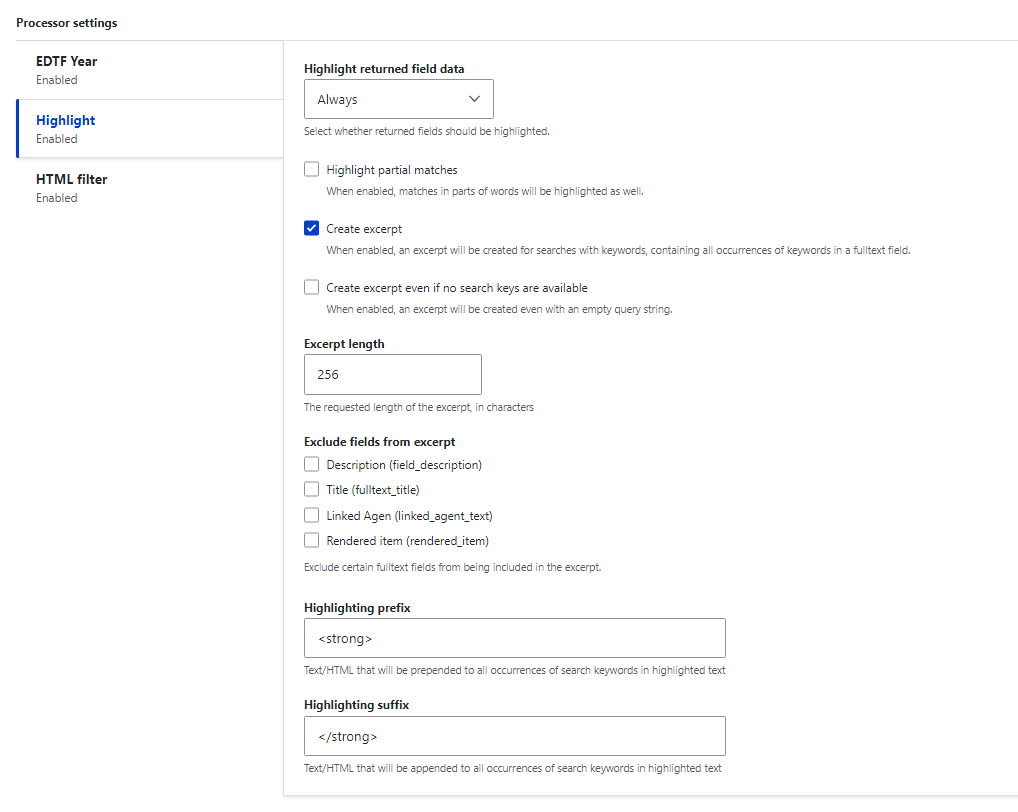 3. Configure Solr Server. - Navigate to `/admin/config/search/search-api` > Edit Server > Configure Solr backend > Advanced > Select `Retrieve highlighted snippets`. 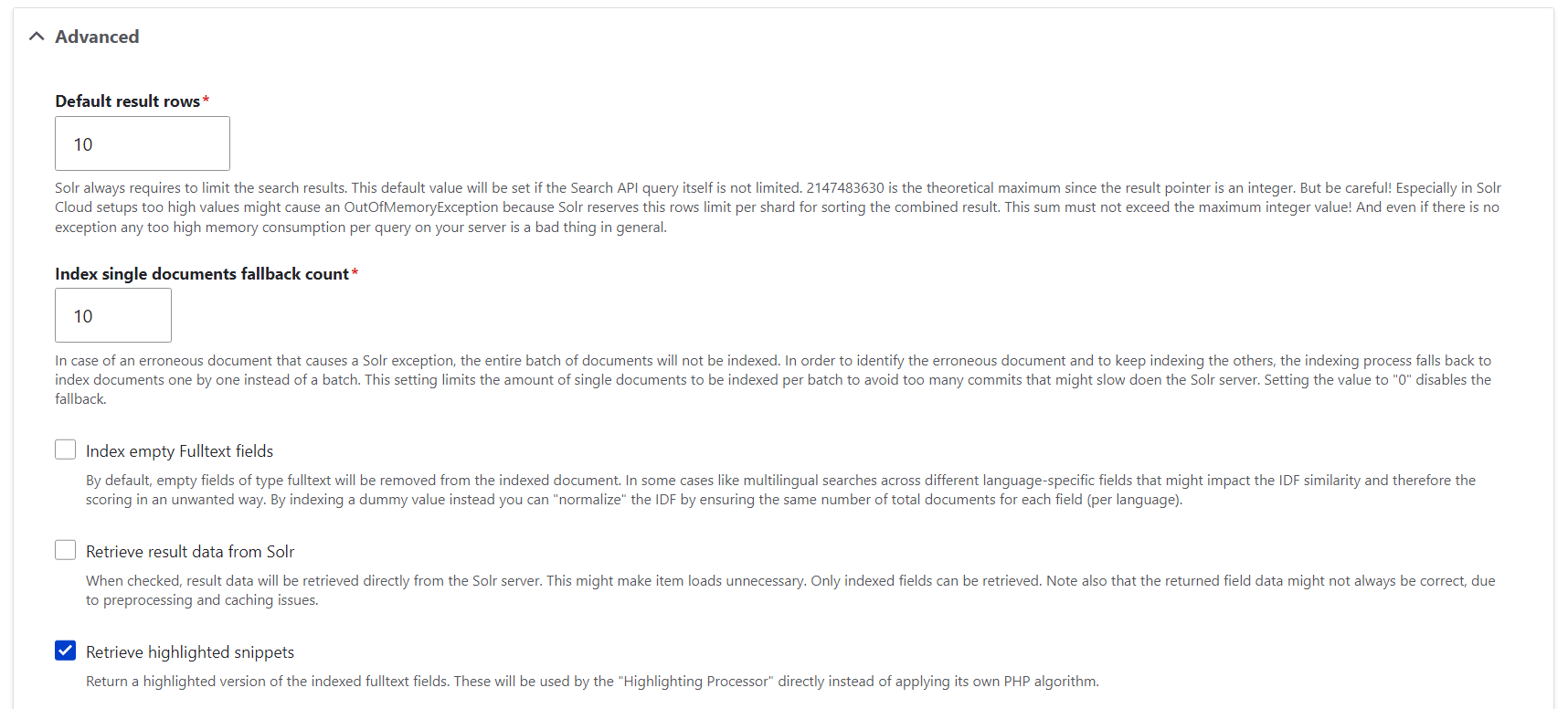 ### Result Summary In your view, in the `Header` section, clikc `Add`, then search and select for "Result summary". 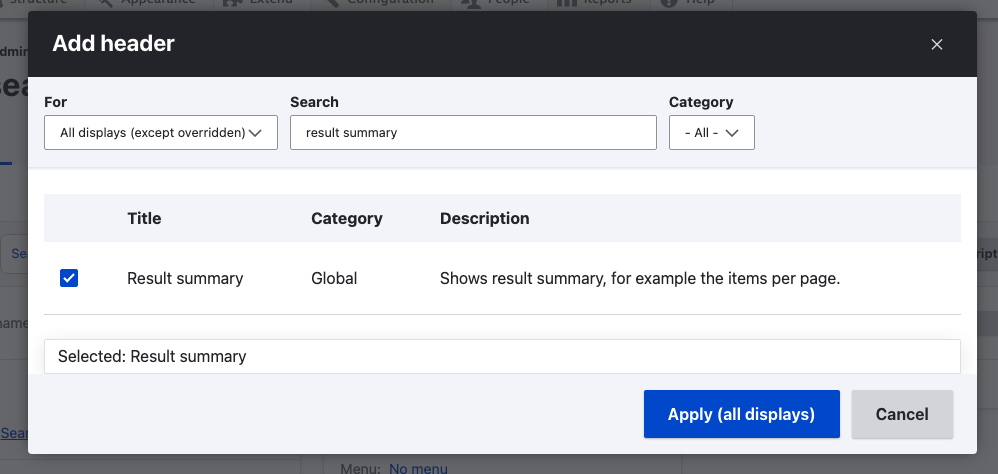 Then, paste the following code to `Display` textarea in `Configure Header: Global: Result summary` ````